
October 2026
Payroll Is Evolving Into a More Strategic Role, Says ADP VP
Laura Lough, Esq. │ October 9, 2026
Reading Time: < 1 minute
Payroll is becoming more strategic, more data-driven, and more intricately connected to the employee experience than ever before. That was the message Tonya James, Vice President of Product Management for Global Payroll at ADP, shared with attendees at PayrollOrg’s 44th Annual Payroll Congress in Nashville, Tenn.
During the Future of Work and Pay General Session, sponsored by ADP, James opened by emphasizing payroll’s growing importance. Payroll serves as a critical function for every business, she said, and payroll professionals deserve recognition for ensuring workers are paid accurately and on time.
In her role at ADP, James oversees product management for multi-country payroll solutions. She acknowledged that working in payroll today is more dynamic than ever, with increasing regulatory complexity and rising expectations from workers and business leaders.
“Through all this growing complexity, you still have to get it right … every time,” James said.
 Survey Reveals Three Key Findings
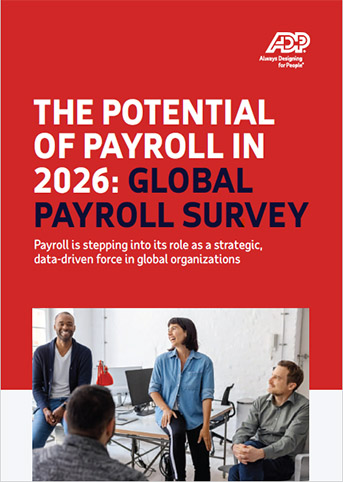
James shared data from ADP’s “The Potential of Payroll in 2026: Global Payroll Survey,” which surveyed more than 1,800 payroll professionals around the world and revealed several notable trends.
“Payroll isn’t just keeping up with change; it’s actually becoming one of the functions driving it,” James said. She highlighted the following three key findings from the survey:
1. Payroll is becoming more strategic.
Nearly half of organizations now operate payroll as its own standalone function, not tucked under finance or HR. This change matters because it shows that businesses increasingly view payroll not simply as a processor of pay but as a connector across finance, HR, compliance, and the employee experience. Payroll is no longer just executing work; it is helping shape decisions.
2. Technology is a force multiplier. Payroll teams are leaning into innovation.
“We’re seeing a clear shift toward using technology as a productivity tool,” James said. According to the survey, 31% of respondents are investing in artificial intelligence (AI) adoption and automation to enhance accuracy. Many organizations have already automated core tasks and processes, such as data entry, reporting, and reconciliation. This innovation elevates the role of payroll, James explained, allowing professionals to spend more time on analysis, advising the business, and using their expertise.
3. Payroll data drives insights and shapes the employee experience. Payroll holds some of the most valuable workforce data in the organization, including labor costs, compliance risks, and workforce trends.
“Payroll has the data to answer the big questions businesses care about,” James said. Those insights are helping leaders recognize that payroll is directly tied to the employee experience. Its impact is tangible because every paycheck is a meaningful touchpoint for workers. “It’s one of the most direct ways employers provide a good experience for their teams,” said James.
Taken together, the findings show a clear shift, James said. Payroll is evolving into a more strategic function that delivers data-driven insights and impacts the employee experience more than ever before.
Laura Lough, Esq. is Senior Director of Publications for PayrollOrg.